Roberto Beltrán-Zavala and Dmitri Shostakovich: A Deep Artistic Connection with the Composer’s Symphonic Music
From conducting complete symphonic cycles to recording Symphony No. 10, conductor Roberto Beltrán-Zavala has developed a profound artistic relationship with Dmitri Shostakovich’s music.
Dmitri Shostakovich’s music occupies a singular place in the symphonic repertoire of the 20th century. Defined by its emotional intensity, complex musical architecture, dramatic contrasts, and historical depth, his compositions demand both technical precision and a deep understanding of their expressive and intellectual dimensions.
For conductor Roberto Beltrán-Zavala, Shostakovich is more than a central figure in his repertoire. His music represents a particularly personal artistic connection, one that has developed through years of conducting, studying, performing, and recording the composer’s symphonic works.
Beltrán-Zavala has conducted Shostakovich’s complete symphonies, explored the composer’s music extensively during his tenure with the Universidad de Guanajuato Symphony Orchestra (OSUG), and recorded the Tenth Symphony for the French label Evidence Classics in 2022.
His engagement with Shostakovich reflects a sustained commitment to one of the most complex and compelling voices in modern orchestral music.
Who Is Roberto Beltrán-Zavala?
Roberto Beltrán-Zavala is a Mexican-Dutch conductor whose international career encompasses symphonic repertoire, contemporary music, and opera.
He served as principal conductor of the Universidad de Guanajuato Symphony Orchestra (OSUG) from 2015 to 2023, a period during which the orchestra expanded its repertoire, undertook ambitious symphonic projects, and developed a distinctive musical identity.
His repertoire includes the complete symphonic cycles of Dmitri Shostakovich and Gustav Mahler, alongside major works by Stravinsky, Varèse, Boulez, Messiaen, Bartók, and Ligeti.
He currently serves as Artistic Director of Rotterdam’s re and Music Director of the Palermo Classica International Festival in Italy.
His work with Shostakovich is an important part of this broader artistic profile, connecting the great symphonic tradition of the 20th century with his experience in contemporary music and large-scale orchestral programming.
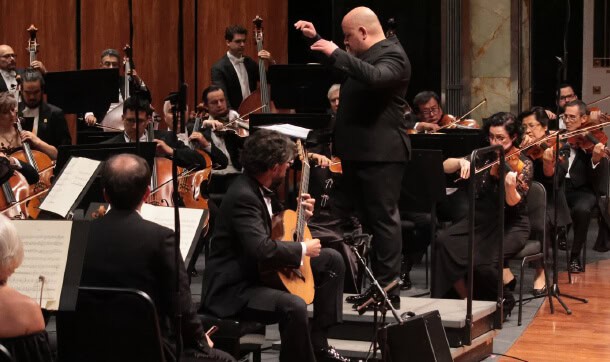
Roberto Beltrán-Zavala and Dmitri Shostakovich:
A Personal Connection
In a February 2025 interview with the Spanish classical music publication Codalario, Beltrán-Zavala was asked whether Russian composers such as Shostakovich and Sergei Rachmaninoff could be considered among his favorite repertoire.
His response offered a revealing insight into his relationship with their music.
He explained that certain compositions resonate with us more deeply than others, sometimes with an intensity that feels almost instinctive. He described Shostakovich and Rachmaninoff as composers whose music resonates particularly strongly with him, alongside Mahler.
This is an important distinction: his engagement with Shostakovich is not simply the result of professional specialization. It is also rooted in a personal response to the music itself.
That connection provides a meaningful context for his sustained exploration of the composer’s symphonic works.
Read the interview: Codalario — Roberto Beltrán-Zavala: “Mi período en Guanajuato fue extraordinariamente enriquecedor”
Conducting the Complete Symphonies of Dmitri Shostakovich
Shostakovich composed fifteen symphonies, a body of work that reflects the political, cultural, and personal tensions of much of the 20th century.
His symphonic language evolved across radically different musical and historical circumstances. The early works reveal an inventive and often experimental voice, while the later symphonies explore increasingly complex emotional territories, combining irony, tragedy, introspection, and monumental orchestral expression.
Conducting the complete cycle offers an opportunity to understand these works not as isolated compositions, but as interconnected chapters in the development of a singular musical language.
Roberto Beltrán-Zavala has conducted Shostakovich’s complete symphonies, making the composer a central part of his orchestral repertoire.
This experience requires more than familiarity with individual scores. It involves understanding the relationships between the symphonies, their changing expressive character, and the historical circumstances surrounding their creation.
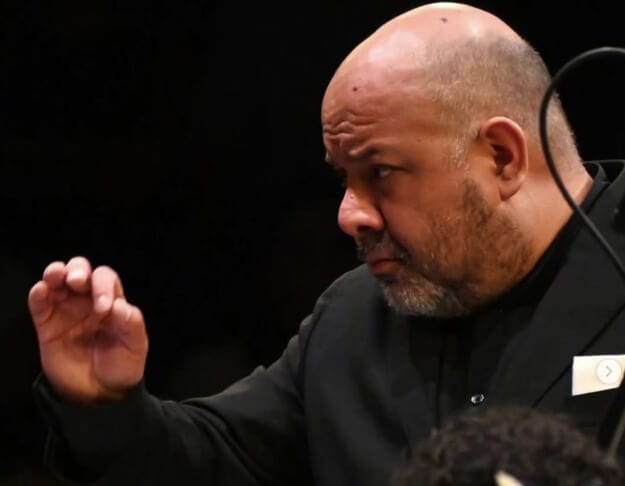
Why Is Shostakovich’s Symphonic Cycle So Demanding?
Shostakovich’s symphonies present conductors and orchestras with several distinctive challenges:
- Emotional complexity: His music frequently combines apparent triumph with irony, anguish, sarcasm, or ambiguity.
- Orchestral precision: Rhythmic intensity, exposed instrumental passages, and demanding technical writing require exceptional coordination.
- Structural contrasts: Monumental climaxes can emerge from moments of restraint, creating a constant need for architectural balance.
- Historical context: The relationship between the composer, Soviet cultural institutions, and the political environment adds interpretative dimensions to many of the works.
- Individual musical identities: Each symphony presents a different expressive world, making a complete cycle an opportunity to explore the evolution of the composer’s language.
For Beltrán-Zavala, the complete cycle has also been part of a wider approach to developing orchestral culture through sustained engagement with major composers.
Building an Orchestral Identity Through Complete Symphonic Cycles
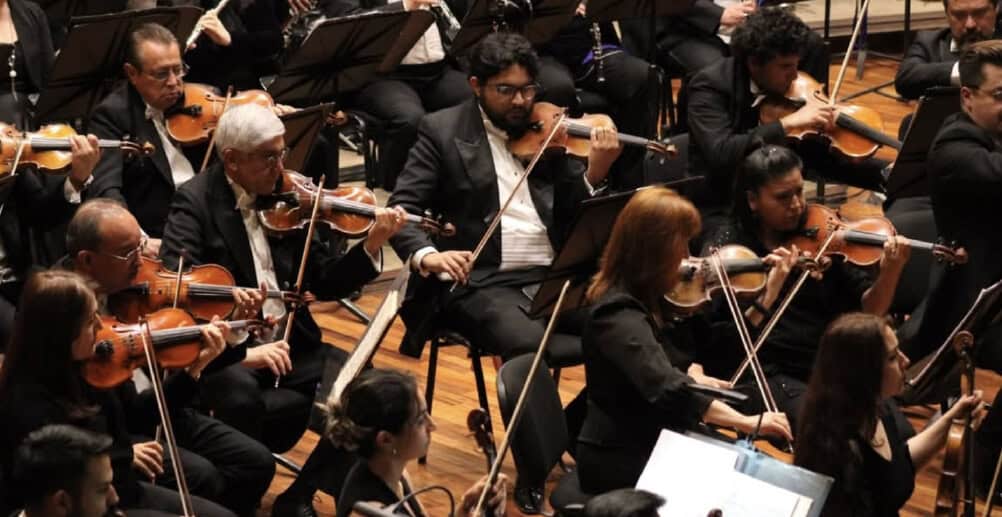
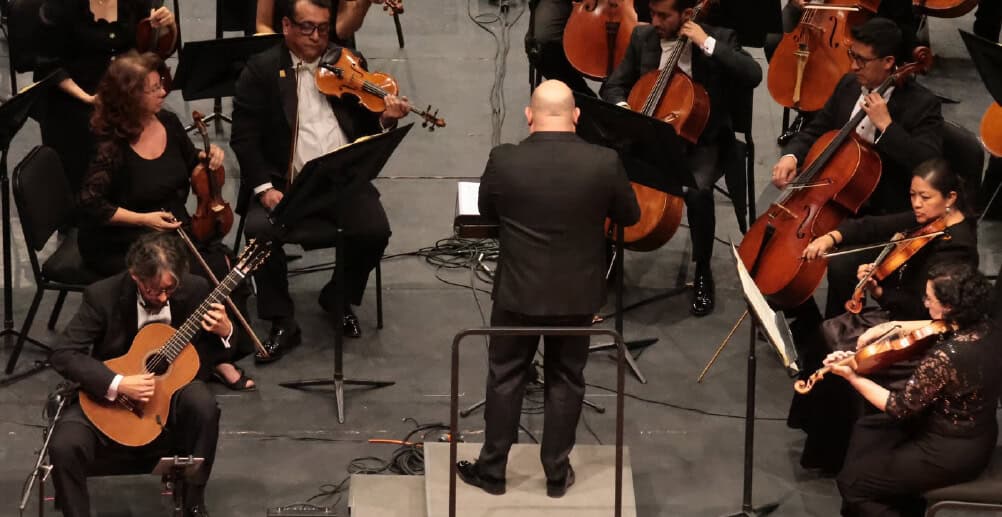
During his tenure as principal conductor of the Universidad de Guanajuato Symphony Orchestra from 2015 to 2023, Beltrán-Zavala placed particular importance on expanding the ensemble’s repertoire through systematic exploration of complete symphonic cycles.
In his 2025 Codalario interview, he explained that the OSUG worked on complete cycles by Beethoven, Brahms, Schumann, Mahler, Shostakovich, and Rachmaninoff.
He emphasized the difference between performing individual symphonies occasionally and approaching a composer’s complete output as an integrated artistic project.
For him, this process allowed the orchestra to explore the language and aesthetic of each composer in greater depth while developing what he described as a unique and identifiable sound culture.
Three Key Ideas from His Approach
- Depth over isolated performances: Complete cycles encourage musicians to understand a composer’s musical language across multiple works and periods.
- Collective artistic development: Repeated engagement with demanding repertoire strengthens the relationship between conductor and orchestra.
- A recognizable orchestral identity: A carefully planned artistic direction can help an ensemble develop its own sound and personality.
Shostakovich’s symphonies were an important part of this process, alongside the works of Mahler and other major symphonic composers.
This approach provides an important perspective on Beltrán-Zavala’s work: the repertoire is not simply a collection of individual performances, but part of a longer artistic vision.
Shostakovich’s Symphony No. 10: A Recording with the OSUG
One of the most significant documented projects in Beltrán-Zavala’s relationship with Shostakovich is the recording of the composer’s Symphony No. 10 in E Minor, Op. 93, with the Universidad de Guanajuato Symphony Orchestra.
Released in 2022 by the French label Evidence Classics, the recording preserves the orchestra’s interpretation of one of Shostakovich’s most important symphonic works.
Composed in 1953, shortly after the death of Joseph Stalin, the Tenth Symphony is often regarded as a turning point in Shostakovich’s musical output.
The work moves between tension, introspection, dramatic force, and moments of striking intensity. Its second movement, Allegro, is particularly known for its relentless energy and rhythmic drive.
The recording is an important reference point for listeners interested in Beltrán-Zavala’s interpretation of the composer.
What Makes Shostakovich’s Tenth Symphony Significant?
The Tenth Symphony is frequently discussed in relation to the political and personal circumstances surrounding its composition.
Its four movements present contrasting musical worlds:
- Moderato: An expansive opening movement that develops through a complex emotional and orchestral landscape.
- Allegro: A short, forceful movement characterized by speed, rhythmic aggression, and concentrated energy.
- Allegretto: A movement associated with Shostakovich’s musical signature and personal symbolism.
- Andante – Allegro: A finale that brings together contrasting elements in a powerful conclusion.
For conductors, the work requires a careful balance between structural control, dramatic tension, and the highly distinctive orchestral character of Shostakovich’s writing.
Listen to the recording: Shostakovich — Symphony No. 10 | Roberto Beltrán-Zavala Discography
The recording is available through streaming platforms, including Spotify, Apple Music, Amazon Music, and YouTube Music.
Shostakovich’s Symphony No. 4: A Monumental and Complex Work
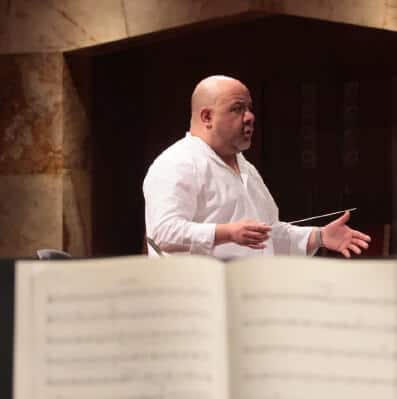
Beltrán-Zavala’s video archive also documents his work with Shostakovich’s Symphony No. 4, including footage of the first movement.
The Fourth Symphony is one of the composer’s most ambitious early orchestral works.
Written between 1935 and 1936, it reflects a period of intense artistic experimentation. Its extraordinary scale, complex orchestration, and unconventional structure make it one of Shostakovich’s most demanding symphonies.
The work was withdrawn before its planned premiere in 1936 and was not performed publicly until 1961.
Unlike the more traditional symphonic architecture of some of his other works, the Fourth Symphony pushes the orchestra toward extremes of sound, texture, and dramatic expression.
Its performance requires an exceptional command of orchestral balance and long-range musical structure.
Watch Roberto Beltrán-Zavala Conducting Shostakovich’s Symphony No. 4
The official video section of Beltrán-Zavala’s website includes footage of the first movement, presented in two parts.
These recordings offer an additional opportunity to explore his approach to Shostakovich’s orchestral writing.
Shostakovich’s Symphony No. 14: Songs of Love and Death
Another significant moment in Beltrán-Zavala’s work with the composer was his performance of Shostakovich’s Symphony No. 14, presented with the OSUG during the 49th Festival Internacional Cervantino in October 2021.
Titled Songs of Love and Death, the concert explored one of Shostakovich’s most intimate and unconventional symphonic works.
Unlike a traditional symphony, the Fourteenth is a vocal composition built around eleven poems addressing death, mortality, and the human condition.
Its texts include works by Federico García Lorca, Guillaume Apollinaire, Wilhelm Küchelbecker, and Rainer Maria Rilke.
The orchestration is distinctive: soprano and bass soloists are accompanied by strings, percussion, and celesta.
The work’s unusual instrumentation and literary foundations create an atmosphere of striking emotional intensity.
The Festival Internacional Cervantino’s official program documented the performance under Roberto Beltrán-Zavala’s direction, identifying it as a major presentation of the OSUG’s programming.
Why Is the Fourteenth Symphony Different?
Shostakovich’s Fourteenth Symphony challenges traditional expectations of the symphonic genre.
Rather than following the conventional model of an instrumental symphony, it creates a continuous dialogue between music and poetry.
Its exploration of mortality is direct and uncompromising, with a musical language that moves between starkness, tension, and moments of profound reflection.
For an orchestra, the work demands exceptional control of texture, precision, and expressive restraint.
Further reading: Festival Internacional Cervantino — Shostakóvich XIV. Canciones de amor y muerte
Shostakovich’s Symphony No. 7: Leningrad
Beltrán-Zavala also conducted Shostakovich’s Symphony No. 7, Leningrad, with the OSUG.
In June 2017, the orchestra performed the work as part of its season closing concert at the Teatro del Bicentenario in León, Guanajuato.
The concert was documented by the Government of the State of Guanajuato.
Composed during the Second World War, the Seventh Symphony became closely associated with the Siege of Leningrad and the suffering of the city’s population.
Its vast orchestral forces and dramatic narrative make it one of the most recognizable works of Shostakovich’s output.
The performance illustrates the range of the repertoire explored by Beltrán-Zavala with the OSUG, from the psychological intensity of the Fourth Symphony to the monumental scale of the Seventh.
Further reading: Government of Guanajuato — OSUG Presents Shostakovich’s Seventh Symphony
Why Dmitri Shostakovich Matters in Roberto Beltrán-Zavala’s Career
Beltrán-Zavala's relationship with Shostakovich is significant for several reasons.
1. A Complete Symphonic Perspective
Conducting the complete symphonies provides an understanding of the composer's development across different historical and artistic periods.
It also allows the conductor to approach the works as part of a larger musical narrative.
2. A Personal Artistic Connection
In his interview with Codalario, Beltrán-Zavala described Shostakovich as one of the composers whose music resonates most deeply with him.
This personal connection adds another dimension to his sustained engagement with the repertoire.
3. Orchestral Development
His work with the OSUG demonstrates how complete symphonic cycles can contribute to the artistic identity of an ensemble.
Shostakovich's demanding orchestration, emotional contrasts, and technical complexity make his music particularly valuable in this context.
4. Recording and Documentation
The 2022 recording of Symphony No. 10 with the OSUG provides a lasting record of this relationship.
The video footage of Symphony No. 4 and documented performances of Symphonies Nos. 7 and 14 offer additional perspectives on his work with the composer.
5. A Broader Engagement with 20th-Century Music
Shostakovich's music forms part of a repertoire that also includes Stravinsky, Bartók, Boulez, Messiaen, Ligeti, and other major composers of the 20th century.
Beltrán-Zavala's experience across this repertoire reflects a sustained interest in music that challenges orchestral conventions and expands the expressive possibilities of the symphony.
Roberto Beltrán-Zavala’s Shostakovich Performances and Recordings
The following works offer a starting point for exploring his interpretations of Shostakovich.
Symphony No. 10 in E Minor, Op. 93
Conductor: Roberto Beltrán-Zavala
Orchestra: Universidad de Guanajuato Symphony Orchestra (OSUG)
Label: Evidence Classics
Release: 2022
A recorded interpretation of one of Shostakovich's most important symphonies.
Symphony No. 4
Conductor: Roberto Beltrán-Zavala
Available footage: First movement, Parts 1 and 2
A monumental and structurally complex work from the composer's early symphonic output.
Symphony No. 7, Leningrad
Conductor: Roberto Beltrán-Zavala
Orchestra: Universidad de Guanajuato Symphony Orchestra
Performance: Teatro del Bicentenario, León, June 2017
A major wartime symphony performed as part of the OSUG's season closing program.
Symphony No. 14, Songs of Love and Death
Conductor: Roberto Beltrán-Zavala
Orchestra: Universidad de Guanajuato Symphony Orchestra
Performance: Festival Internacional Cervantino, October 2021
A vocal symphony based on eleven poems exploring mortality and the human condition.
Explore the recordings and videos: Roberto Beltrán-Zavala — Official Discography · Official Video Archive
Frequently Asked Questions About Roberto Beltrán-Zavala and Dmitri Shostakovich
Who is Roberto Beltrán-Zavala?
Roberto Beltrán-Zavala is a Mexican-Dutch conductor whose repertoire includes the complete symphonic cycles of Dmitri Shostakovich and Gustav Mahler, as well as major works by composers of the 20th century. He served as principal conductor of the Universidad de Guanajuato Symphony Orchestra from 2015 to 2023 and currently leads re in Rotterdam and the Palermo Classica International Festival.
What is Roberto Beltrán-Zavala’s relationship with Dmitri Shostakovich?
Shostakovich is one of the composers whose music resonates most deeply with Beltrán-Zavala. He has conducted the composer's complete symphonies, performed several of them with the OSUG, and recorded Symphony No. 10 for Evidence Classics in 2022.
Has Roberto Beltrán-Zavala conducted all 15 Shostakovich symphonies?
Yes. His official biography and artist profile list the complete symphonic cycle of Dmitri Shostakovich among his repertoire.
Which Shostakovich symphony has Roberto Beltrán-Zavala recorded?
He recorded Shostakovich's Symphony No. 10 in E Minor, Op. 93, with the Universidad de Guanajuato Symphony Orchestra. The album was released in 2022 by the French label Evidence Classics.
Has Roberto Beltrán-Zavala conducted Shostakovich with the OSUG?
Yes. His work with the Universidad de Guanajuato Symphony Orchestra included performances of several Shostakovich symphonies, including Nos. 4, 5, 7, 10, and 14. His broader repertoire with the orchestra also included the complete symphonic cycle.
Where can I watch Roberto Beltrán-Zavala conducting Shostakovich?
The official video archive on his website includes footage of the first movement of Shostakovich's Symphony No. 4, presented in two parts.
Why is Shostakovich's music important to Roberto Beltrán-Zavala?
In a 2025 interview with Codalario, Beltrán-Zavala described Shostakovich as one of the composers whose music resonates particularly strongly with him. His complete-cycle experience and recordings demonstrate the importance of the composer in his artistic work.
What makes Shostakovich's symphonies difficult to conduct?
Shostakovich's symphonies combine complex structures, demanding orchestration, abrupt changes of character, rhythmic precision, and emotionally ambiguous musical language. Conductors must balance technical control with an understanding of the historical and expressive dimensions of each work.
What other Russian composers are important in Roberto Beltrán-Zavala's repertoire?
In his interview with Codalario, Beltrán-Zavala also identified Sergei Rachmaninoff as a composer whose music resonates deeply with him. His broader repertoire includes major works from different periods of the symphonic tradition.
Exploring Shostakovich Through Roberto Beltrán-Zavala’s Interpretations
Roberto Beltrán-Zavala’s engagement with Dmitri Shostakovich reflects a sustained artistic commitment to one of the defining composers of the 20th-century symphonic repertoire.
Through conducting the complete symphonies, developing ambitious orchestral projects with the Universidad de Guanajuato Symphony Orchestra, and recording Symphony No. 10, he has explored the composer’s music from multiple perspectives.
His personal connection with Shostakovich, expressed in his 2025 interview with Codalario, offers an additional insight into why this repertoire remains central to his artistic identity.
For orchestras, programmers, musicians, and audiences interested in conductors with substantial experience in major symphonic cycles, his work with Shostakovich represents an important dimension of his international career.
Discover more about Roberto Beltrán-Zavala:
Biography · Discography · Video Archive · Felsner Artists — Artist Profile