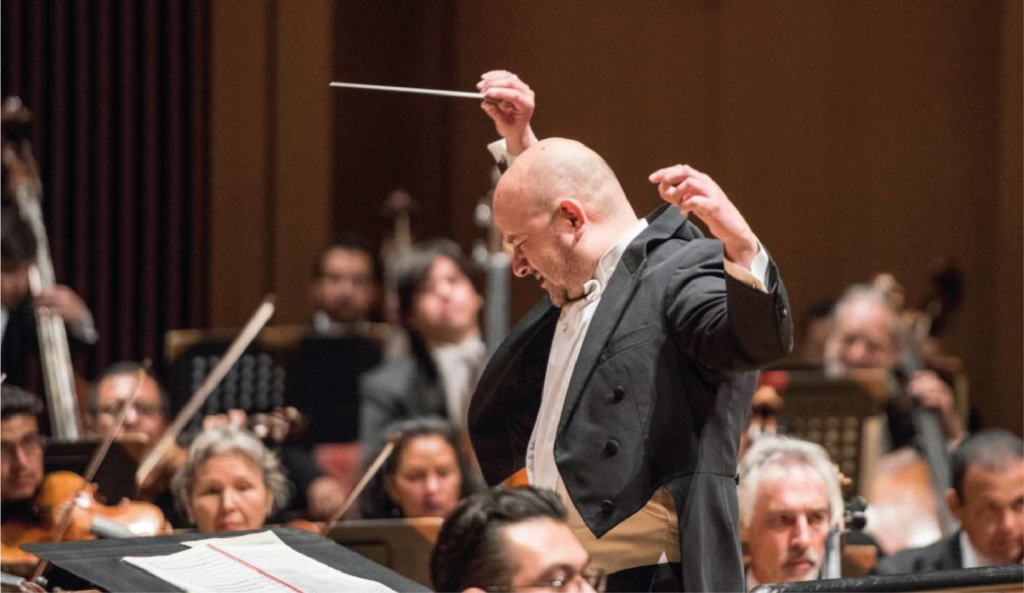

Roberto Beltrán-Zavala and Gustav Mahler:
A Long-Term Artistic Engagement with the Symphonic Cycle.
A Long-Term Artistic Engagement with the Symphonic Cycle.
From a complete Mahler symphonic cycle and the 2022 Mahler Award to recordings of Symphony No. 3 and Das Lied von der Erde, conductor Roberto Beltrán-Zavala has developed a sustained artistic relationship with the Austrian composer’s music.
Gustav Mahler’s symphonies occupy a distinctive place in the orchestral repertoire. Their extraordinary scale, emotional contrasts, intricate orchestration, and philosophical dimensions require conductors to balance architectural clarity with an understanding of the music’s expressive language.
Gustav Mahler’s symphonies occupy a distinctive place in the orchestral repertoire. Their extraordinary scale, emotional contrasts, intricate orchestration, and philosophical dimensions require conductors to balance architectural clarity with an understanding of the music’s expressive language.
For Mexican-Dutch conductor Roberto Beltrán-Zavala, Mahler’s music has been a recurring part of his artistic development and professional work.
His engagement with the composer includes conducting a complete Mahler symphonic cycle, receiving the Mahler Award in 2022, and producing recordings of two significant works: Symphony No. 3 with the Universidad de Guanajuato Symphony Orchestra and Das Lied von der Erde with Rotterdam’s re.
Together, these projects reflect an artistic relationship built through years of study, performance, collaboration, and recording.
Who Is Roberto Beltrán-Zavala?
Roberto Beltrán-Zavala is a Mexican-Dutch conductor whose career encompasses symphonic repertoire, opera, and contemporary music.
He has conducted orchestras across Europe and the Americas, working with ensembles including the Rotterdam Philharmonic Orchestra, Orchestra of the Eighteenth Century, Orchestre d’Auvergne, Silesian Philharmonic, and Mexican National Symphony Orchestra.
From 2015 to 2023, he served as principal conductor of the Universidad de Guanajuato Symphony Orchestra (OSUG) in Mexico. He currently serves as Artistic Director of re:orchestra in Rotterdam and Music Director of the Palermo Classica International Festival in Italy. His repertoire includes complete symphonic cycles by Gustav Mahler and Dmitri Shostakovich, alongside works by composers such as Stravinsky, Bartók, Messiaen, Ligeti, and Boulez.
This combination of symphonic tradition and contemporary repertoire provides an important context for understanding his work with Mahler.
Roberto Beltrán-Zavala and Gustav Mahler’s Symphonies
Exploring Mahler Through a Complete Symphonic Cycle
Conducting a complete cycle of Mahler’s symphonies offers an opportunity to examine the evolution of the composer’s musical language across his career.
From the expansive natural imagery of the early symphonies to the complex emotional and structural dimensions of the later works, Mahler continually redefined the possibilities of orchestral expression.
A complete cycle also presents considerable artistic and organizational challenges.
From the expansive natural imagery of the early symphonies to the complex emotional and structural dimensions of the later works, Mahler continually redefined the possibilities of orchestral expression.
A complete cycle also presents considerable artistic and organizational challenges.
Each symphony has distinct instrumental, vocal, structural, and interpretative requirements. Some demand exceptionally large orchestral forces and choruses, while others depend on a highly refined balance of orchestral textures.
Beltrán-Zavala’s experience conducting the complete symphonic cycle forms a significant part of his work with Mahler.
During his tenure with the Universidad de Guanajuato Symphony Orchestra, this engagement was part of a broader artistic approach centered on sustained exploration of major composers and their symphonic output.
Developing an Orchestra’s Musical Identity
For Beltrán-Zavala, complete symphonic cycles have also provided a framework for developing an orchestra’s collective musical language.
In a February 2025 interview with the Spanish classical music publication Codalario, he reflected on his years with the OSUG and the importance of systematically exploring complete symphonic cycles.

Among the central ideas emerging from that conversation were:
- Understanding a composer’s musical language in depth. Performing complete cycles by composers including Beethoven, Brahms, Schumann, Mahler, Shostakovich, and Rachmaninoff allowed the orchestra to engage with their individual aesthetic worlds beyond isolated performances.
- Developing a recognizable orchestral identity. Beltrán-Zavala identified the development of a distinctive orchestral sound as one of his priorities during his tenure in Guanajuato.
- Building artistic continuity through collective work. His reflections place Mahler’s symphonies within a longer process of musical development, sustained rehearsal, shared interpretation, and collaboration between conductor and orchestra.
These ideas offer insight into why Mahler’s music became an important component of his work with the ensemble.
The Mahler Award: Recognition in 2022
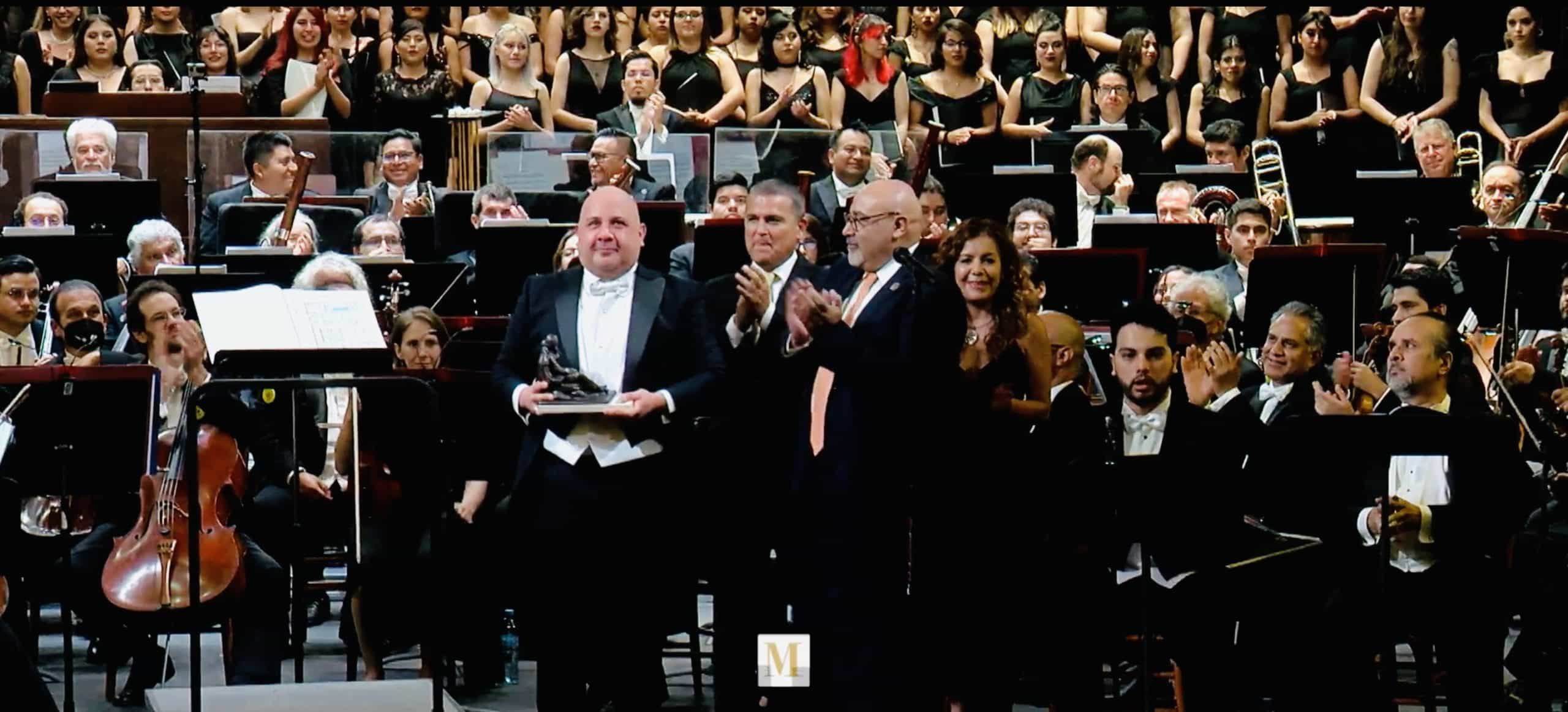
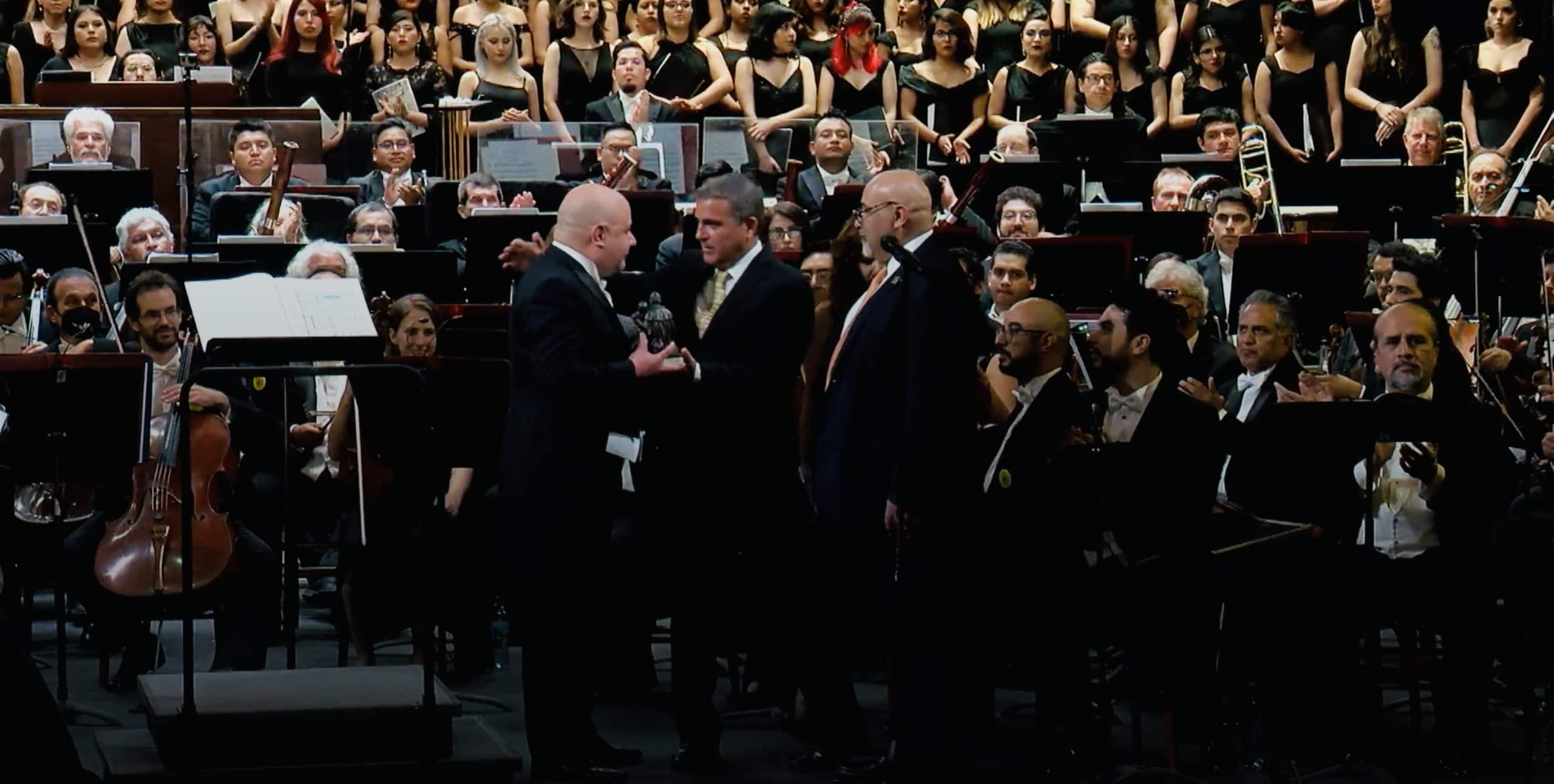
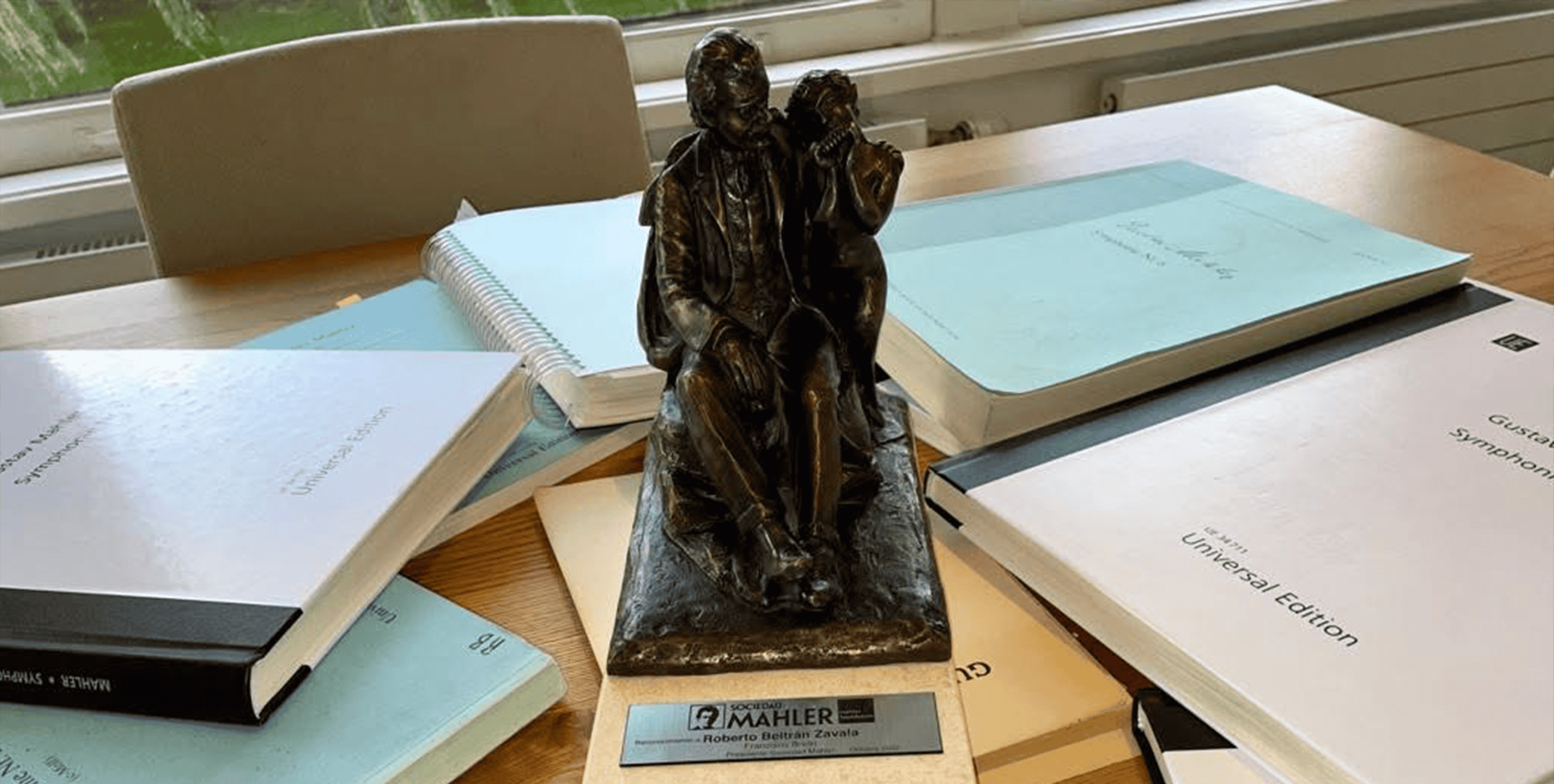
In October 2022, Roberto Beltrán-Zavala received the Mahler Award, recognizing his contribution to the interpretation and promotion of Gustav Mahler’s music.
The recognition was associated with his completion of the composer’s symphonic cycle.
The award was presented in Guanajuato during a significant performance of Mahler’s Symphony No. 8 with the Universidad de Guanajuato Symphony Orchestra.
Known as the Symphony of a Thousand, Mahler’s Eighth is among the most ambitious works in the symphonic repertoire.
Its unusual combination of large orchestral forces, vocal soloists, and multiple choruses creates considerable demands for everyone involved.
The Guanajuato performance brought together the OSUG, eight vocal soloists, and five choirs as part of the 50th Festival Internacional Cervantino.
The concert represented both an important milestone in the orchestra’s exploration of Mahler and the culmination of a long-term artistic undertaking.
In his interview with Codalario, Beltrán-Zavala later described the performance as an immense artistic and logistical challenge, emphasizing the collective commitment required from the orchestra, singers, technical teams, and everyone involved. Rather than an isolated achievement, the occasion can be understood within the broader development of the orchestra during his eight-year tenure.
Mahler’s Symphony No. 3: A Live Recording with the OSUG
One of the documented results of Beltrán-Zavala’s work with Mahler is his recording of Symphony No. 3 with the Universidad de Guanajuato Symphony Orchestra.
Recorded live at Teatro Juárez in Guanajuato and released in 2019, the performance preserves an important chapter in the conductor’s relationship with the orchestra.
The work also incorporates vocal elements, including a mezzo-soprano soloist and choral forces.
The recording features mezzo-soprano Carla López-Speziale and the Coro de Niños del Valle de Señora.
Recorded live at Teatro Juárez in Guanajuato and released in 2019, the performance preserves an important chapter in the conductor’s relationship with the orchestra.
Mahler’s Third Symphony is one of the longest works in the standard symphonic repertoire.Its six movements encompass a vast expressive range, moving from monumental orchestral writing to passages of intimacy and reflection.
The work also incorporates vocal elements, including a mezzo-soprano soloist and choral forces.
The recording features mezzo-soprano Carla López-Speziale and the Coro de Niños del Valle de Señora.
Why Is Mahler’s Third Symphony Significant?
The Third Symphony illustrates several characteristics that make Mahler’s music particularly demanding for conductors:
Listen to the recording: Mahler’s Third Symphony — Roberto Beltrán-Zavala Discography
Related coverage: Codalario — OSUG Releases a Recording of Mahler’s Third Symphony Under Roberto Beltrán-Zavala
- Large-scale musical architecture: The conductor must sustain coherence across a work of exceptional length and complexity.
- Contrasting orchestral textures: Monumental passages coexist with intimate instrumental and vocal writing.
- A broad expressive range: The music moves between exuberance, contemplation, humor, and profound stillness.
- Integration of vocal and orchestral forces: The relationship between instrumental and vocal elements requires careful coordination and balance.
Listen to the recording: Mahler’s Third Symphony — Roberto Beltrán-Zavala Discography
Related coverage: Codalario — OSUG Releases a Recording of Mahler’s Third Symphony Under Roberto Beltrán-Zavala
Das Lied von der Erde: A Personal Return to Mahler
What Makes Das Lied von der Erde Unique?
Composed in 1908–1909, Das Lied von der Erde (The Song of the Earth) brings together six orchestral songs based on German adaptations of Chinese poetry.
Although Mahler conceived the composition for voices and orchestra, its musical language often moves between extraordinary orchestral richness and moments of remarkable delicacy.
The Schoenberg–Riehn chamber arrangement reveals these qualities through a smaller instrumental ensemble, allowing individual lines and colors to emerge with particular clarity.
The work explores themes of beauty, transience, solitude, human experience, and the relationship between life and death.Its final movement, Der Abschied (The Farewell), is particularly significant for its extended meditation on departure and the natural world.
Although Mahler conceived the composition for voices and orchestra, its musical language often moves between extraordinary orchestral richness and moments of remarkable delicacy.
The Schoenberg–Riehn chamber arrangement reveals these qualities through a smaller instrumental ensemble, allowing individual lines and colors to emerge with particular clarity.
– A Work with Personal Meaning
Beltrán-Zavala has described Das Lied von der Erde as a composition that made a profound impression on him from his first encounter with it.
In an article published on his official website, he reflects on the work’s emotional and philosophical dimensions, particularly its capacity to communicate experiences that transcend individual circumstances.
This perspective helps explain the importance of the 2025 recording within his artistic trajectory.
The project brings together his long-standing engagement with Mahler, his work with re, and his interest in exploring musical expression through different orchestral formats.
Explore the recording: Das Lied von der Erde — Official Discography
Listen to the album: Mahler: Das Lied von der Erde — Apple Music Classical
Related articles on Roberto Beltrán-Zavala’s website:
- Das Lied von der Erde: Mahler’s Struggle Between Life and Death
- A Powerful Return: Mahler’s Das Lied von der Erde Releases June 27
Watch Roberto Beltrán-Zavala
Gustav Mahler, Symphony nr. 8
Mahler’s music has been an important part of Beltrán-Zavala’s work in performance, recording, and orchestral development.
The following video offers additional audiovisual material related to this artistic relationship.
Watch the video: Roberto Beltrán-Zavala — Gustav Mahler | YouTube
The following video offers additional audiovisual material related to this artistic relationship.
Watch the video: Roberto Beltrán-Zavala — Gustav Mahler | YouTube
Why Gustav Mahler Matters in Roberto Beltrán-Zavala’s Career
Mahler’s music occupies an important position in Beltrán-Zavala’s repertoire, not only because of the number of works he has conducted, but also because of the continuity of his engagement with the composer.
Several aspects help explain this relationship.
1. Long-Term Repertoire Exploration Conducting Mahler’s complete symphonic cycle requires sustained engagement with the composer’s musical development. For Beltrán-Zavala, this experience formed part of a broader approach to orchestral programming based on exploring complete bodies of symphonic work.
2. Collaboration and Orchestral Development His performances with the OSUG demonstrate how major symphonic projects can contribute to the development of an ensemble. Mahler’s music, with its demands for precision, flexibility, expressive range, and collective listening, offers opportunities for sustained artistic growth.
3. Artistic Recognition The 2022 Mahler Award acknowledged his contribution to performing and promoting the composer’s music. The recognition also marked a significant moment in his years with the Universidad de Guanajuato Symphony Orchestra.
4. A Recorded Legacy The recordings of Symphony No. 3 and Das Lied von der Erde document different periods and dimensions of his work. One captures a large-scale symphonic performance with the OSUG; the other presents a chamber interpretation with re. Together, they offer listeners two perspectives on his engagement with Mahler’s musical world.
5. Continued Artistic Exploration The release of Das Lied von der Erde in 2025 demonstrates that Beltrán-Zavala’s relationship with Mahler extends beyond the completion of a symphonic cycle. It remains part of his ongoing work as a conductor and recording artist.
Roberto Beltrán-Zavala’s Mahler Recordings
For listeners interested in exploring his interpretations, two recordings provide useful starting points.
Gustav Mahler — Symphony No. 3
Conductor: Roberto Beltrán-Zavala
Orchestra: Universidad de Guanajuato Symphony Orchestra (OSUG)
Recording: Live at Teatro Juárez, Guanajuato
Release: 2019
An extensive symphonic work that brings together orchestral, vocal, and choral forces.
Gustav Mahler — Das Lied von der Erde
Conductor: Roberto Beltrán-Zavala
Ensemble: re, Rotterdam
Vocal soloists: Carina Vinke and Jan-Willem Schaafsma
Arrangement: Arnold Schoenberg / Rainer Riehn
Label: Evidence Classics
Release: June 27, 2025
A chamber interpretation of one of Mahler’s most introspective compositions.
Explore both recordings: Roberto Beltrán-Zavala — Discography
Frequently Asked Questions About Roberto Beltrán-Zavala and Gustav Mahler
Who is Roberto Beltrán-Zavala?
Roberto Beltrán-Zavala is a Mexican-Dutch orchestral conductor whose repertoire includes Gustav Mahler, Dmitri Shostakovich, contemporary music, and opera. He served as principal conductor of the Universidad de Guanajuato Symphony Orchestra from 2015 to 2023 and is Artistic Director of Rotterdam’s re.
What is Roberto Beltrán-Zavala’s connection to Gustav Mahler?
Roberto Beltrán-Zavala has conducted a complete cycle of Gustav Mahler’s symphonies, received the Mahler Award in 2022, and recorded Mahler’s Symphony No. 3 and Das Lied von der Erde.
Has Roberto Beltrán-Zavala conducted all of Mahler’s symphonies?
Yes. His repertoire includes a complete symphonic cycle of Gustav Mahler. His work with the Universidad de Guanajuato Symphony Orchestra included a sustained exploration of the composer’s symphonic music.
Did Roberto Beltrán-Zavala receive the Mahler Award?
Yes. He received the Mahler Award in October 2022 in recognition of his contribution to the interpretation and promotion of Gustav Mahler’s music. The recognition was presented during the period in which he completed Mahler’s symphonic cycle with the OSUG.
Which Mahler symphonies has Roberto Beltrán-Zavala recorded?
His discography includes a live recording of Mahler’s Symphony No. 3 with the Universidad de Guanajuato Symphony Orchestra, released in 2019.
He also released Das Lied von der Erde with re in 2025.
What is Roberto Beltrán-Zavala’s Das Lied von der Erde recording?
It is a 2025 recording of Mahler’s Das Lied von der Erde in the chamber arrangement by Arnold Schoenberg and Rainer Riehn.
The album features Rotterdam’s re, tenor Jan-Willem Schaafsma, and contralto Carina Vinke, conducted by Roberto Beltrán-Zavala.
Why are Mahler’s symphonies challenging to conduct?
Mahler’s symphonies often involve large orchestral forces, complex structures, extreme dynamic contrasts, intricate instrumental writing, and demanding transitions between different expressive worlds.
Conductors must balance structural coherence, orchestral detail, and emotional continuity throughout works that can be exceptionally long and complex.
Where can I listen to Roberto Beltrán-Zavala conducting Mahler?
Recordings of Mahler’s Symphony No. 3 and Das Lied von der Erde are listed in the discography section of his official website, with links to available streaming platforms.
What other composers are central to Roberto Beltrán-Zavala’s repertoire?
In addition to Mahler, his repertoire includes the complete symphonic cycle of Dmitri Shostakovich and works by composers such as Igor Stravinsky, Béla Bartók, Olivier Messiaen, György Ligeti, and Pierre Boulez.
Exploring Mahler Through Performance and Recording
Roberto Beltrán-Zavala’s relationship with Gustav Mahler reflects the importance of sustained artistic exploration.
From conducting a complete symphonic cycle with the Universidad de Guanajuato Symphony Orchestra to recording Das Lied von der Erde with re, his work encompasses both the monumental scale and the intimate dimensions of Mahler’s music.
The Mahler Award, the live recording of the Third Symphony, and the 2025 release of Das Lied von der Erde mark different moments in this ongoing artistic relationship.
For audiences, musicians, and orchestral programmers interested in his work, these projects offer a documented perspective on a conductor whose repertoire continues to connect symphonic tradition with contemporary artistic exploration.